How to Actually Choose Your Extracurriculars (It's Not About the Résumé)
“Just be yourself.” It's the advice every college admissions person gives, and I get why it sounds trite. It's printed on inspirational posters. It doesn't tell you what to actually do on a Tuesday afternoon. But underneath the cliche, it's genuinely true, and it's more specific than it sounds once you unpack what admissions officers actually mean by it.
They're not just looking for “authentic.” They're looking for interesting. For someone who gives back to their community. For someone who's already shown, in high school, that they'll show up and contribute to a college campus too. Those are different, more concrete things than just “be yourself,” and they're things you can actually build toward.
You don't have to be an Olympian or cure cancer
This is the part that gets lost. Families sometimes think admissions officers want a resume of extraordinary, headline-worthy achievements. Mostly, they don't. What they're actually trying to figure out is simpler: Is this person curious about the world? Are they kind? Do they want to give back? Can they work well with others? Are they a leader, in whatever form leadership takes for them? Are they creative?
Those questions get answered by depth, not by a long list of clubs you showed up to twice. Pick something you actually care about. Then go deep.
What “going deep” actually looks like
In our own family, both of my daughters found their way to this by following something they genuinely loved, not by picking something because it would look good.
My oldest daughter, Helena, has always loved birding. During the pandemic, she founded a birding club at her high school. That love of birds eventually led somewhere concrete: for her senior project, she wrote and presented an actual proposal to the DC City Council, making the case for bird-safe glass to be required on new construction projects across the city. She's also deeply interested in social justice, and her other clubs centered around that work, including her involvement with Fly by Light, a community-based social justice organization. None of that started as a strategic plan. It started because she genuinely cared, and she kept showing up.
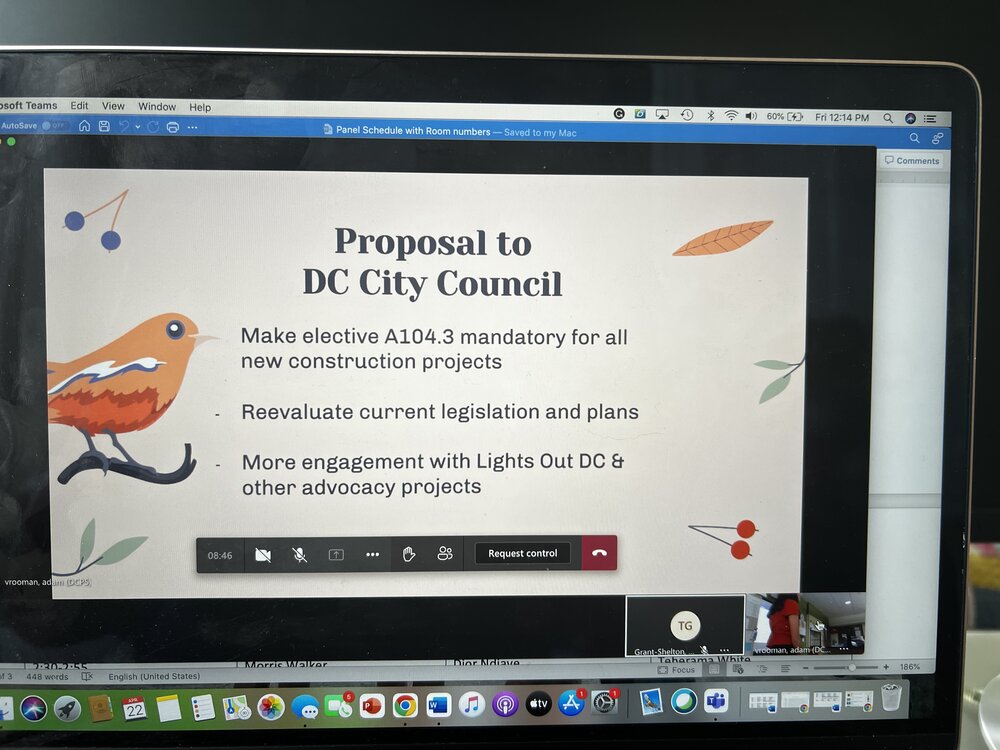
Helena presenting her senior project proposal to the DC City Council, advocating for mandatory bird-safe glass on new construction.
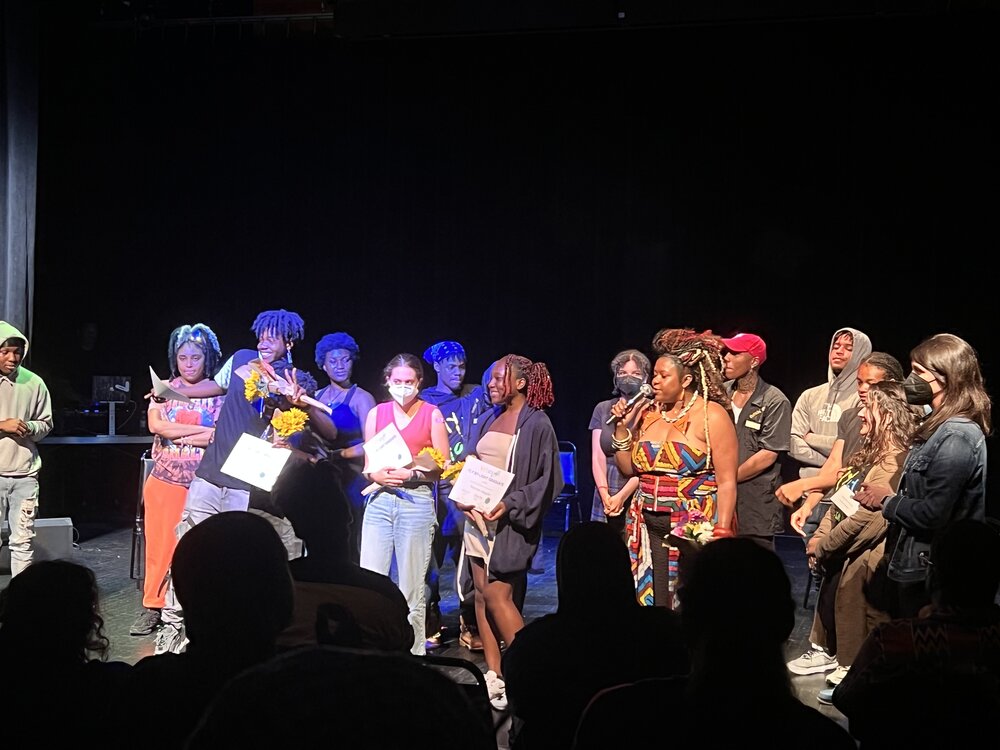
Helena on stage as part of Fly by Light, a community-based social justice organization she was involved with throughout high school.
My younger daughter founded a club focused on period poverty in 2021. The club raised money to buy period products and donate them to the DC Diaper Bank, and just as importantly, worked to erase the stigma around periods so people could talk openly about what they actually need. That club is still running today, years later, at her former high school, still raising real money and doing real good.
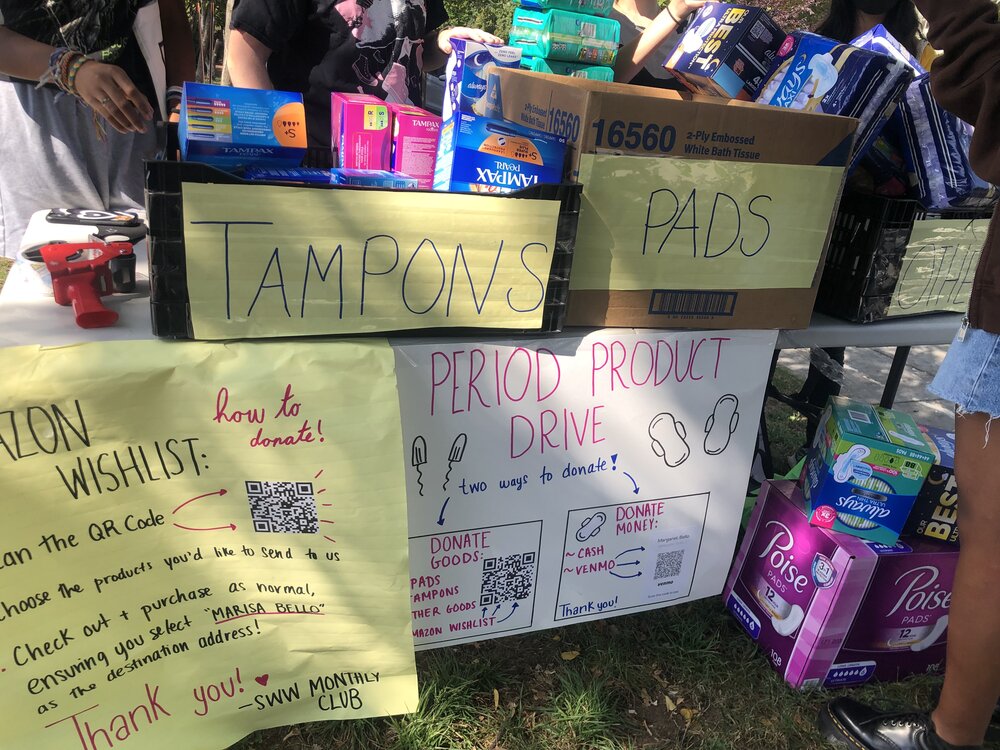
The period product drive our youngest daughter led as part of the club she founded to fight period poverty.
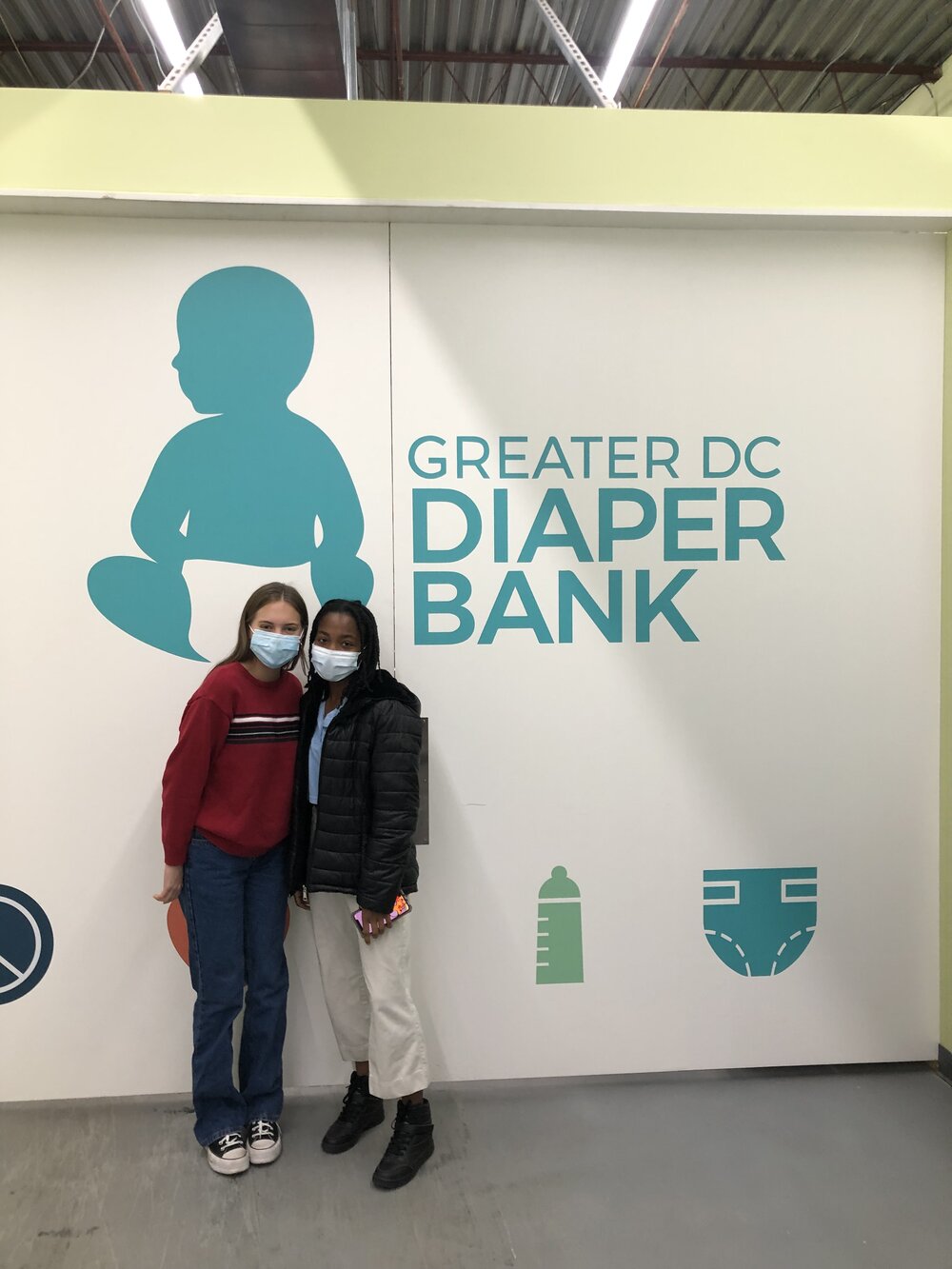
Our youngest daughter with a friend, right after delivering donated products to the Greater DC Diaper Bank.
Neither of these started as a college application strategy. They started as genuine interests that got pursued deeply, over years, not weeks.
The part most students skip: tracking your impact
Here's the piece that actually separates a good application from a forgettable one. It's one thing to write that you founded a club to fight period poverty. It's a completely different, far more powerful thing to say you founded the club, and the club has raised enough money to provide a full year of period products for 100 people.
Impact matters, and specific, real numbers make impact visible in a way that vague descriptions never do. If you're involved in something you care about, start tracking it now, not senior year when you're scrambling to remember. How many people did you serve? How much money was raised? How many events did you run? How did the thing you built outlast your own involvement, the way my younger daughter's club has?
A few more examples, if you're still looking for your own version of this
Your niche interest doesn't need to resemble anyone else's. Here are a few directions, just to show how differently this can look:
The mender
A student who loves sewing and textile repair could start a free “repair café,” fixing clothing for a local shelter or community closet instead of letting it go to waste. Impact to track: number of garments repaired, pounds of textile waste diverted from landfills.
The game lover
A student who loves chess or strategy games could run a free after-school club teaching younger kids, using games to build math and logic skills. Impact to track: number of students served, any measurable improvement in participants' confidence or skills over a semester.
The storyteller
A student drawn to interviewing and storytelling could start a podcast or video series spotlighting local small businesses or overlooked community members. Impact to track: number of businesses featured, downloads or views, any real partnerships or visibility it created for the people featured.
The grower
A student who loves gardening could take on a community garden plot and donate the harvest to a local food pantry. Impact to track: pounds of produce donated, number of families served.
Notice what all of these share: a real interest, pursued consistently, that ends up genuinely serving other people. That's the whole formula.
The big ideas, all together
- Be yourself. Not a version you think looks good on paper.
- Pursue your passion deeply, not a dozen things shallowly.
- Track your impact, in real numbers, from early on.
- Stay curious about the world, and let that curiosity lead somewhere.
This is exactly the kind of thing I love helping students think through, not manufacturing an interest to look impressive, but noticing what's already genuinely there and helping a student build it into something real. If you want help figuring out what that looks like for your student, book a free intro call, or join one of my free info sessions to learn more about how I work with families.
Maggie